How much will clamping force and torque increase as bolt strength increases?
2024-12-02


In the field of mechanical manufacturing and engineering,
bolt as a common and key fastener, its performance directly affects the reliability and safety of the whole structure.
As a factory with thirty-four years of focus on fastener production,
today we come to discuss with you the interesting and practical problem of how much clamping force and torque will increase correspondingly when bolt strength increases.
1, the basic concept of bolt strength grade
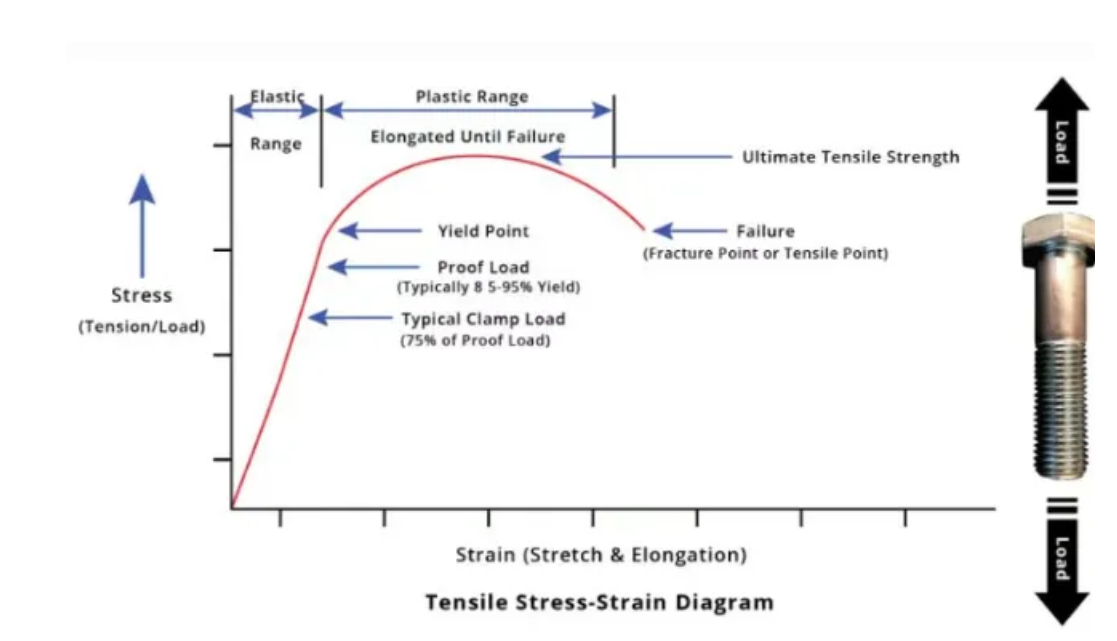
The strength level of bolts is an important index to measure its performance,
and the common bolt strength levels are 3.6, 4.6, 4.8, 5.6, 5.8, 6.8, 8.8, 9.8, 10.9, 12.9 and so on.
These grade labels are composed of two numbers that indicate the nominal tensile strength value and the flexion ratio of the bolt material, respectively.
For example, class 8.8 bolt, its tensile strength is 800MPa, yield strength is 800×0.8 = 640MPa;
The tensile strength of class 10.9 bolts is 1000MPa, and the yield strength is 1000×0.9 = 900MPa.
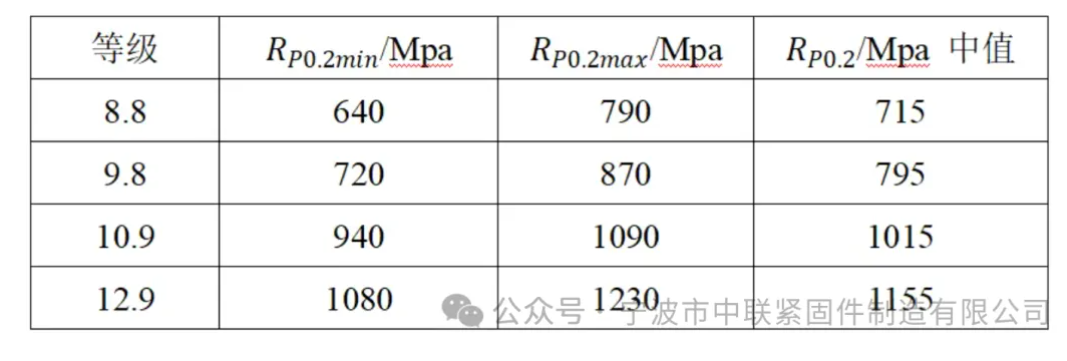
Bolts of different strength grades are suitable for different working conditions and load requirements, the higher the grade, the greater the load the bolt can bear, but the corresponding cost will be higher.
2, the relationship between bolt strength and clamping force
The clamping force is the compression force generated between the connecting parts after the bolt is pre-tightened, which ensures that there is sufficient contact area between the parts to transfer the load.
Under normal circumstances, when there is no external load,
the pre-tightening force of the bolt is completely converted into the clamping force,
and the two values are equal.
The pretightening force of the bolt is closely related to the strength level of the bolt, the higher the strength level, the greater the pretightening force that the bolt can produce under the same tightening degree,
The pretightening force of the bolt is closely related to the strength level of the bolt, the higher the strength level, the greater the pretightening force that the bolt can produce under the same tightening degree,
resulting in the greater the clamping force.
However, when there are external loads, things get a little more complicated.
If the external load is within the elastic limit of the bolt material,
the deformation of the bolt will absorb part of the load, and the clamping force may be reduced, but as long as the external load is lower than the pre-tightening force of the bolt,
the bolt can still maintain the stability of the connection,
but the size of the clamping force will gradually decrease with the increase of the external load.
When the external load exceeds the pre-tightening force of the bolt, the bolt will further stretch,
which may lead to the separation of the connector and the loss of clamping force,
seriously threatening the stability of the connection.
3, the relationship between bolt strength and torque
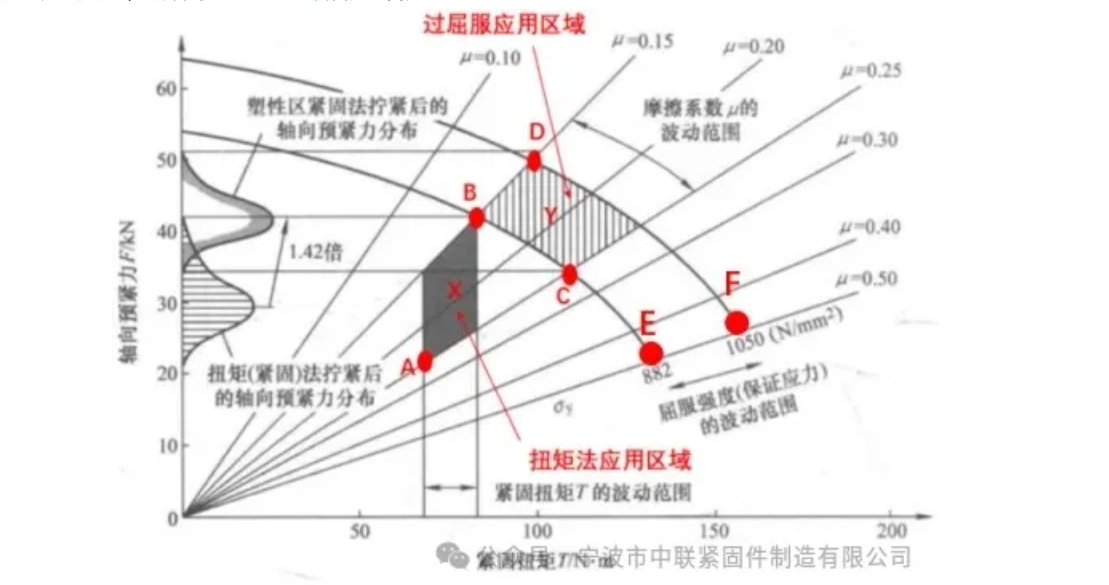
Torque is the rotating torque that causes the bolt to produce tightening force.
In practical engineering applications, we usually control the pre-tightening force of the bolt indirectly by controlling the tightening torque.
The increase of bolt strength grade will change the relationship between torque and clamping force.
Theoretically,
according to the calculation formula of torque (T = kFd) (where (T) is the tightening torque, (k) is the torque coefficient, (F) is the initial preload, and (d) is the nominal diameter of the thread),
when the bolt strength increases, the required torque will increase accordingly to achieve the same clamping force.
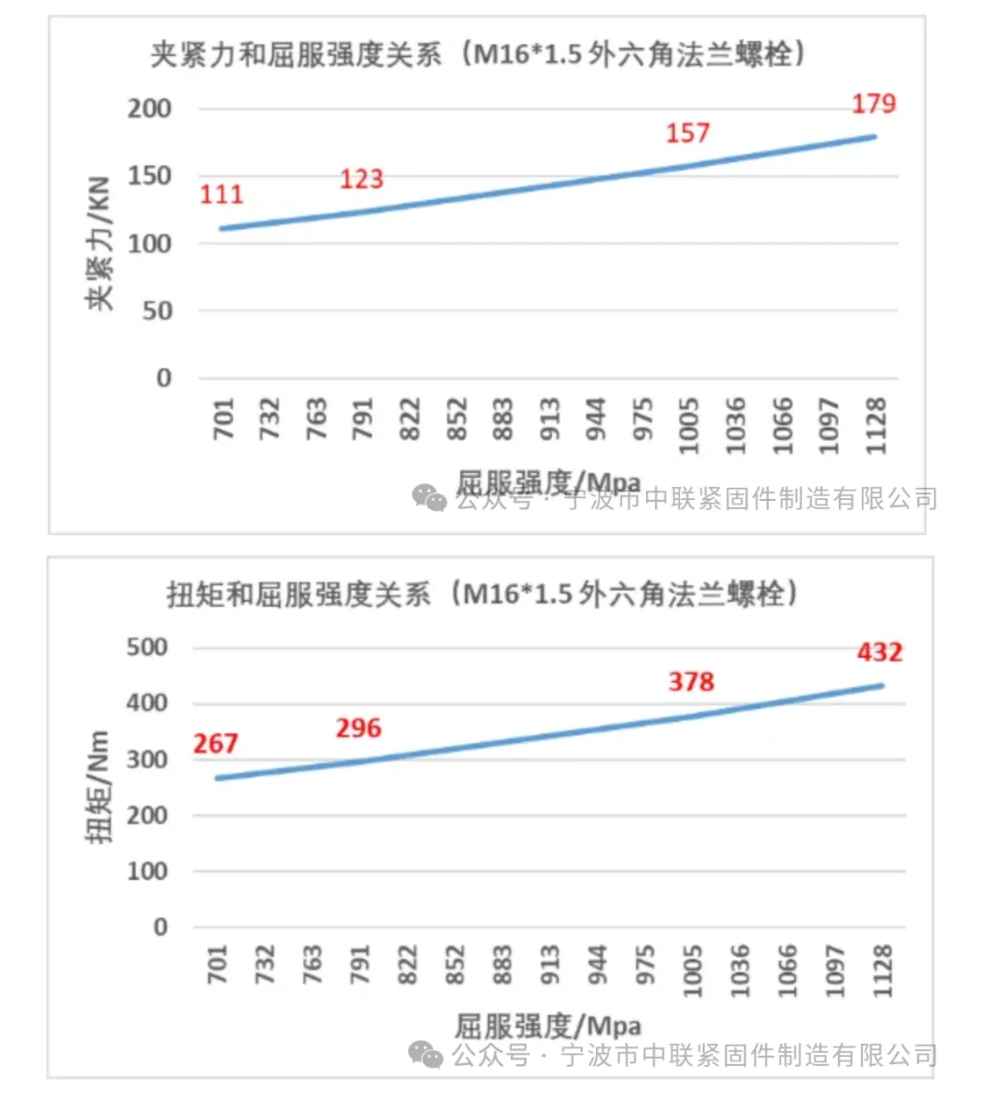
Experimental studies have shown that by changing the strength level of the bolt,
setting the corresponding yield torque,
measuring the clamping force and torque on the thread pair during the tightening process,
it is found that the increase of the bolt strength level will change the torque coefficient,
and then affect the conversion relationship between the torque and the clamping force.
For example, for the same specification of bolts, from 8.8 to 10.9,
under the premise of ensuring the reliability of the connection,
the tightening torque may be increased by about 30%-50%,
but the specific increase proportion will be affected by many factors such as the friction coefficient,
the geometry of the thread pair and so on.
4. Considerations in practical applications
In practical engineering applications, we can not only determine the specific increase in clamping force and torque when the bolt strength increases based on the theoretical relationship,
but also need to consider the following factors:
Coefficient of friction: The coefficient of friction is an important factor affecting the torque coefficient,
Coefficient of friction: The coefficient of friction is an important factor affecting the torque coefficient,
which in turn affects the relationship between torque and clamping force.
Different surface treatment processes,
lubrication conditions and connection materials will lead to changes in the friction coefficient,
so that the same strength level of bolts in different application scenarios,
the corresponding relationship between the clamping force and torque is different.
Connection structure:
The geometry and material properties of the connection components also have an impact on the clamping force. For example,
thicker connecting parts will produce large elastic deformation when the bolt is tightened,
which absorbs a part of the preload,
resulting in the actual increase in the clamping force less than the theoretical value.
In addition, the material hardness, elastic modulus and other characteristics of the connecting parts also affect the distribution and size of the clamping force.
In addition, the material hardness, elastic modulus and other characteristics of the connecting parts also affect the distribution and size of the clamping force.
Tightening method:
Different tightening methods and tools also have a great impact on the tightening effect of bolts. Manual tightening, pneumatic tightening and hydraulic tightening methods have differences in the accuracy and stability of the control torque,
which will also lead to the actual clamping force obtained by the bolt.
Therefore, when selecting tightening methods and tools, it is necessary to match reasonably according to specific engineering requirements and bolt strength levels.
V. Summary
The increase of bolt strength will increase the clamping force and torque, but the specific increase value is affected by a variety of factors. As a professional fastener manufacturer, we understand the importance of accurate control of bolt clamping force and torque to ensure the safety and reliability of engineering structures. In the past thirty-four years, we have been committed to the development and production of fasteners, and constantly optimize product quality and performance to meet the needs of different customers in various working conditions.
If you encounter any problems in the selection, use or tightening of bolts, please feel free to contact us. With our extensive industry experience and expertise, we will provide you with the best quality solutions to ensure that your engineering structure is stable and reliable, so that every bolt plays its due role.
Hope the above content is helpful to you, you can adjust and modify the article according to the actual situation. If you have any other questions, please feel free to keep me posted.
Address: CHINA Ningbo
Whatsapp: 00852-68229670
Whatsapp: 00852-68229670
E-mail:sales08@sinofastener.com
Linkedln:Sinofastener Sun
Twitter:Sinofastener
Facebook: Ningbo Zhonglian Fastener MFG CO.,LTD
Web: www.zlfastener.com
Keyword:
Linkedln:Sinofastener Sun
Twitter:Sinofastener
Facebook: Ningbo Zhonglian Fastener MFG CO.,LTD
Web: www.zlfastener.com
Keyword:
china supplies,OEM/ODM,Manufacturer,screw,bolt,hardware.bolt and nut,fastener,carbon steel,fange nut.hexagonal nut.stainless steel nut,zlfastener,sinofastener
We're excited to announce that our company is fully capable of meeting the requirements of the EU Carbon Border Adjustment Mechanism (CBAM).
Merry Christmas
Related Article
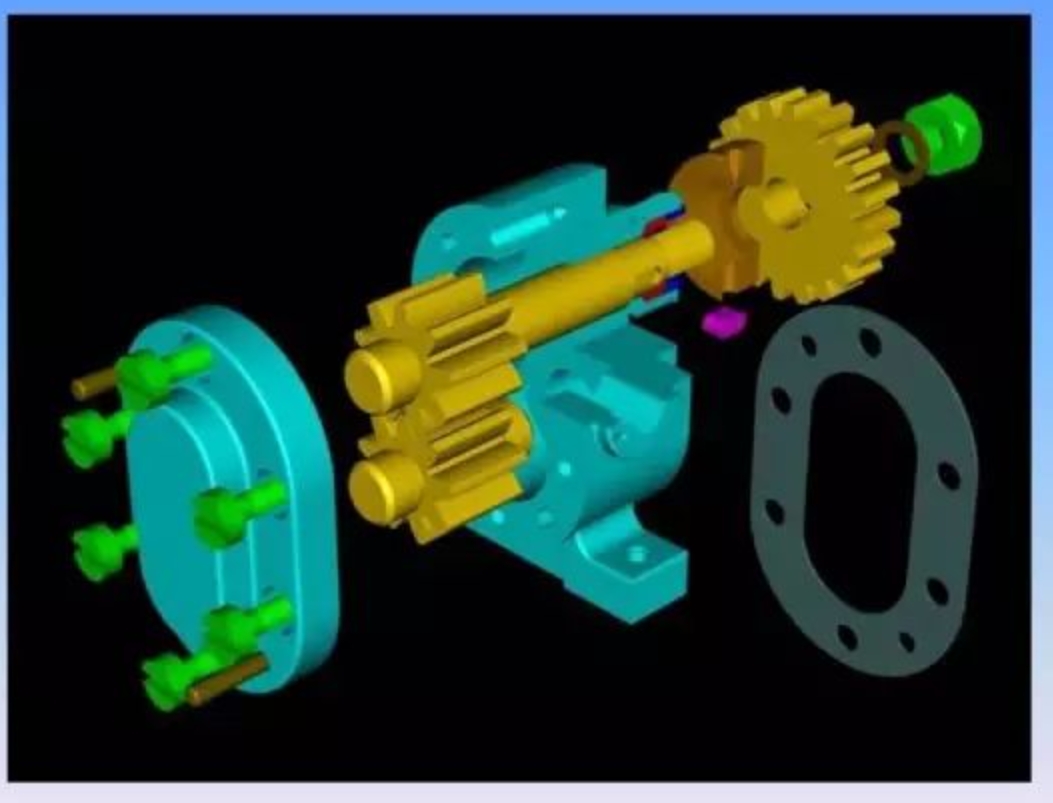
When explaining complex parts such as gears and shafts, the step-by-step diagrams and detailed annotations in the tutorial,
Let me easily master the key skills such as dimensioning, tolerance coordination and so on.
What's more, by actually drawing it,
I have a deep understanding of the assembly relationship and movement principle between parts,
If you are also a fan or practitioner of industrial production, mechanical design, highly recommended
Let me easily master the key skills such as dimensioning, tolerance coordination and so on.
What's more, by actually drawing it,
I have a deep understanding of the assembly relationship and movement principle between parts,
If you are also a fan or practitioner of industrial production, mechanical design, highly recommended
Mechanical parts drawing classic tutorial-First part