How to express the hardness of heat treatment? Detailed explanation of HRC, HB, HS and the conversion method of the three
2024-11-25
"How to express the hardness of heat treatment? HRC, HB, HS details and three conversion methods"
In the production process of fasteners, heat treatment is a crucial link, which directly affects the performance and quality of fasteners.
As a key indicator of fasteners after heat treatment, hardness is expressed in a variety of ways, among which HRC, HB and HS are common.
So, what do these three represent? How to convert?
I. The meaning of HRC, HB and HS
HRC (Rockwell Hardness)
HRC is the hardness value measured by Rockwell hardness tester. Rockwell hardness is determined by indentation depth.
For fasteners, the HRC hardness value is usually used to measure the hardness after heat treatment such as quenching and tempering. For example, some high-strength bolts and nuts may be required to reach a certain HRC hardness value to ensure their reliability and durability during use.
HRC is the hardness value measured by Rockwell hardness tester. Rockwell hardness is determined by indentation depth.
For fasteners, the HRC hardness value is usually used to measure the hardness after heat treatment such as quenching and tempering. For example, some high-strength bolts and nuts may be required to reach a certain HRC hardness value to ensure their reliability and durability during use.
HB (Brinell Hardness)
HB is a steel ball or cemented carbide ball with a certain diameter, pressed into the surface of the pattern with a specified test force, and the test force is removed after the specified holding time to measure the indentation diameter of the specimen surface. The Brinell hardness value is the quotient of the load divided by the surface area of the indentation sphere.
In the fastener industry, Brinell hardness is often used for hardness testing of raw materials, and some fastener products with relatively low hardness requirements.
HB is a steel ball or cemented carbide ball with a certain diameter, pressed into the surface of the pattern with a specified test force, and the test force is removed after the specified holding time to measure the indentation diameter of the specimen surface. The Brinell hardness value is the quotient of the load divided by the surface area of the indentation sphere.
In the fastener industry, Brinell hardness is often used for hardness testing of raw materials, and some fastener products with relatively low hardness requirements.
HS (Shore Hardness)
HS, also known as Shore hardness, is a dynamic hardness test method. It is to drop a certain weight of the punch from a certain height on the surface of the sample, and the height of the punch bounce is related to the hardness of the sample surface.
The application of Shore hardness in the field of fasteners is relatively small, but it may be used in some special occasions, such as the rapid detection of hardness or the hardness assessment of some small and thin fasteners.
HS, also known as Shore hardness, is a dynamic hardness test method. It is to drop a certain weight of the punch from a certain height on the surface of the sample, and the height of the punch bounce is related to the hardness of the sample surface.
The application of Shore hardness in the field of fasteners is relatively small, but it may be used in some special occasions, such as the rapid detection of hardness or the hardness assessment of some small and thin fasteners.
2. Conversion method of HRC, HB and HS
Because different hardness testing methods are based on different principles and measurement parameters, the conversion between them is not a simple linear relationship. Here are some common conversion formulas and reference data:
Conversion of HRC and HB
In general, the conversion between HRC and HB can refer to the following empirical formula: When HRC < 40, HRC≈0.1HB; When HRC > 40, HRC≈0.01HB. It should be noted that this is only an approximate conversion relationship, and there may be some errors in practical application.
For example, if the Brinell hardness of a fastener is known to be 250HB, the corresponding Rockwell hardness is estimated to be about 25HRC according to the above formula.
In general, the conversion between HRC and HB can refer to the following empirical formula: When HRC < 40, HRC≈0.1HB; When HRC > 40, HRC≈0.01HB. It should be noted that this is only an approximate conversion relationship, and there may be some errors in practical application.
For example, if the Brinell hardness of a fastener is known to be 250HB, the corresponding Rockwell hardness is estimated to be about 25HRC according to the above formula.
Conversion of HRC and HS
The conversion relationship between HRC and HS is relatively complicated, and there is no universal accurate formula at present. Under normal circumstances, you can make a rough conversion by referring to the hardness comparison table.
For example, in some hardness comparison tables, 50HRC is approximately equivalent to 72HS.
The conversion relationship between HRC and HS is relatively complicated, and there is no universal accurate formula at present. Under normal circumstances, you can make a rough conversion by referring to the hardness comparison table.
For example, in some hardness comparison tables, 50HRC is approximately equivalent to 72HS.
Conversion of HB and HS
Similarly, there is no fixed formula for the conversion between HB and HS, which usually needs to be determined with the help of hardness comparison tables.
For example, 200HB might correspond to 40HS.
Similarly, there is no fixed formula for the conversion between HB and HS, which usually needs to be determined with the help of hardness comparison tables.
For example, 200HB might correspond to 40HS.
It should be emphasized that these conversion relations are for reference only, in the actual production and testing, the appropriate hardness test method should be selected according to the specific situation, and the actual measured value shall prevail.
If an accurate hardness value is required, it is best to use the same type of hardness tester for measurement to avoid conversion errors between different hardness testing methods.
In short, in the heat treatment process of fasteners, understanding the expression of hardness and the conversion relationship between different hardness values is of great significance for ensuring product quality and selecting the appropriate processing technology and testing method.
Our thirty-four years fastener factory has been committed to providing high quality fastener products, strict control of the heat treatment process, to ensure that every fastener has reliable hardness and performance.
The above content is for reference only, you can adjust and modify according to the actual situation. If you can provide more specific requirements or questions about fastener hardness, I can provide you with more targeted answers.
Address: CHINA Ningbo
Whatsapp: 00852-68229670
Linkedln:Sinofastener Sun
Twitter:Sinofastener
Facebook: Ningbo Zhonglian Fastener MFG CO.,LTD
Web: www.zlfastener.com
Keyword:
Whatsapp: 00852-68229670
Linkedln:Sinofastener Sun
Twitter:Sinofastener
Facebook: Ningbo Zhonglian Fastener MFG CO.,LTD
Web: www.zlfastener.com
Keyword:
china supplies,OEM/ODM,Manufacturer,screw,bolt,hardware.bolt and nut,fastener,carbon steel,fange nut.hexagonal nut.stainless steel nut,zlfastener,sinofastener
Types and Uses of Fasteners Commonly Used in Mechanical, Electrical, and Plumbing Construction
We're excited to announce that our company is fully capable of meeting the requirements of the EU Carbon Border Adjustment Mechanism (CBAM).
Related Article
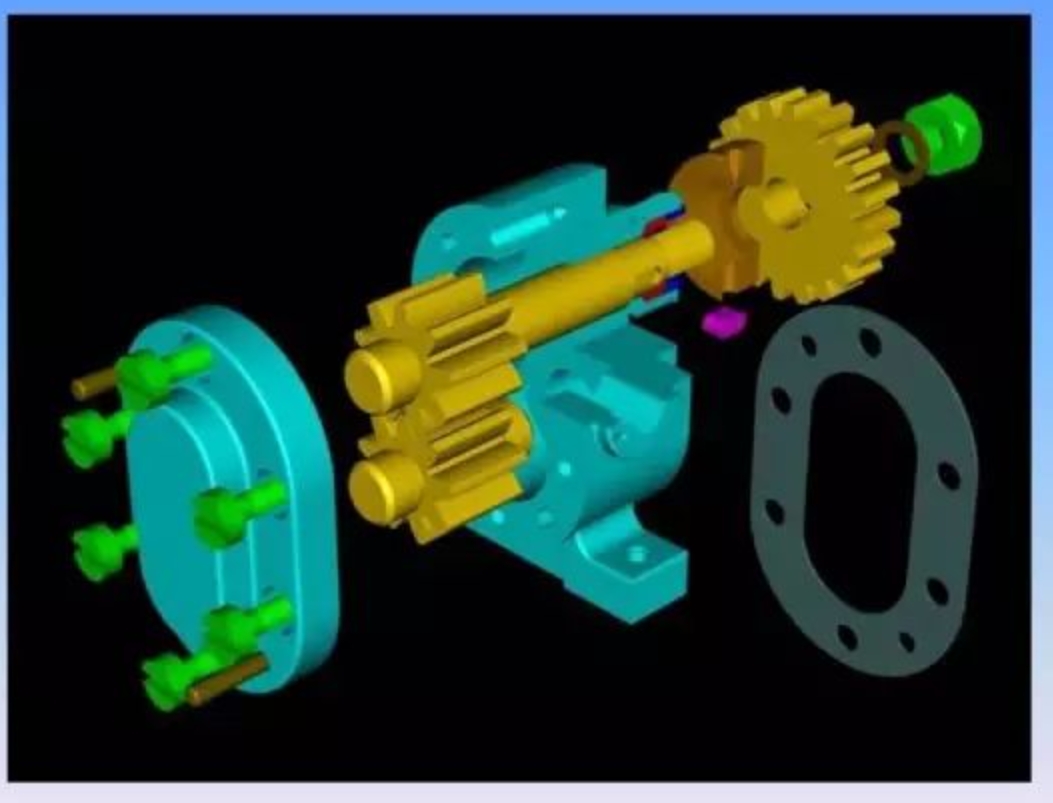
When explaining complex parts such as gears and shafts, the step-by-step diagrams and detailed annotations in the tutorial,
Let me easily master the key skills such as dimensioning, tolerance coordination and so on.
What's more, by actually drawing it,
I have a deep understanding of the assembly relationship and movement principle between parts,
If you are also a fan or practitioner of industrial production, mechanical design, highly recommended
Let me easily master the key skills such as dimensioning, tolerance coordination and so on.
What's more, by actually drawing it,
I have a deep understanding of the assembly relationship and movement principle between parts,
If you are also a fan or practitioner of industrial production, mechanical design, highly recommended
Mechanical parts drawing classic tutorial-First part