Mechanical parts drawing classic tutorial-First part
2024-11-04
Our company is a focus on fasteners thirty-four years of source factory,
In the industry has a wealth of practical experience and methodology.
Our company has been continuously carrying out industry professional sharing in the public number,
Aim to communicate with more friends in the industry.
In this section,
We will introduce you to the "classic course of mechanical parts drawing" =
If you are interested, please pay attention to and collect ~
In order to better introduce to you,
In the later stage, we will invite our professional quality inspection department staff to do popular science experiments for you.
In the industry has a wealth of practical experience and methodology.
Our company has been continuously carrying out industry professional sharing in the public number,
Aim to communicate with more friends in the industry.
In this section,
We will introduce you to the "classic course of mechanical parts drawing" =
If you are interested, please pay attention to and collect ~
In order to better introduce to you,
In the later stage, we will invite our professional quality inspection department staff to do popular science experiments for you.
In order to restore the integrity and professionalism of the content,
the picture text is in Chinese,
if there are curious readers can chat with us to further discuss the product issues.
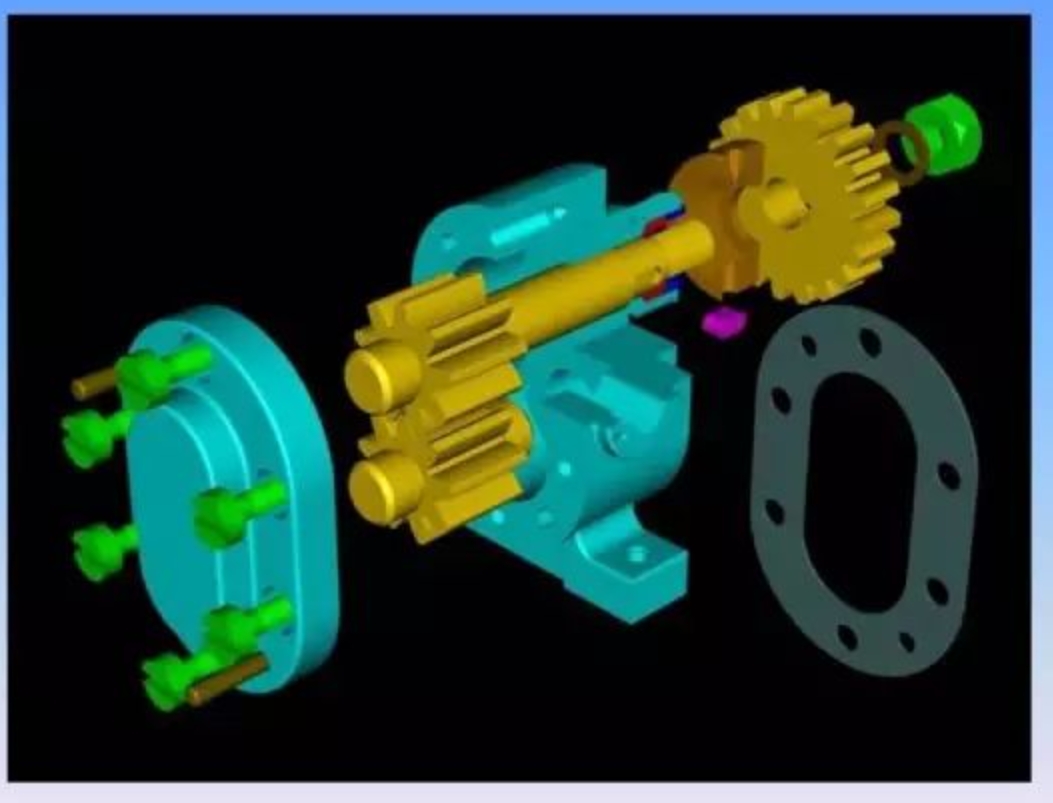
Standard parts:
the national standard will be its type, structure, material, size, accuracy and painting are standardized parts. Such as bolts, double-ended studs, screws, nuts, washers, as well as keys, pins, bearings, etc., by specialized manufacturers for mass production.
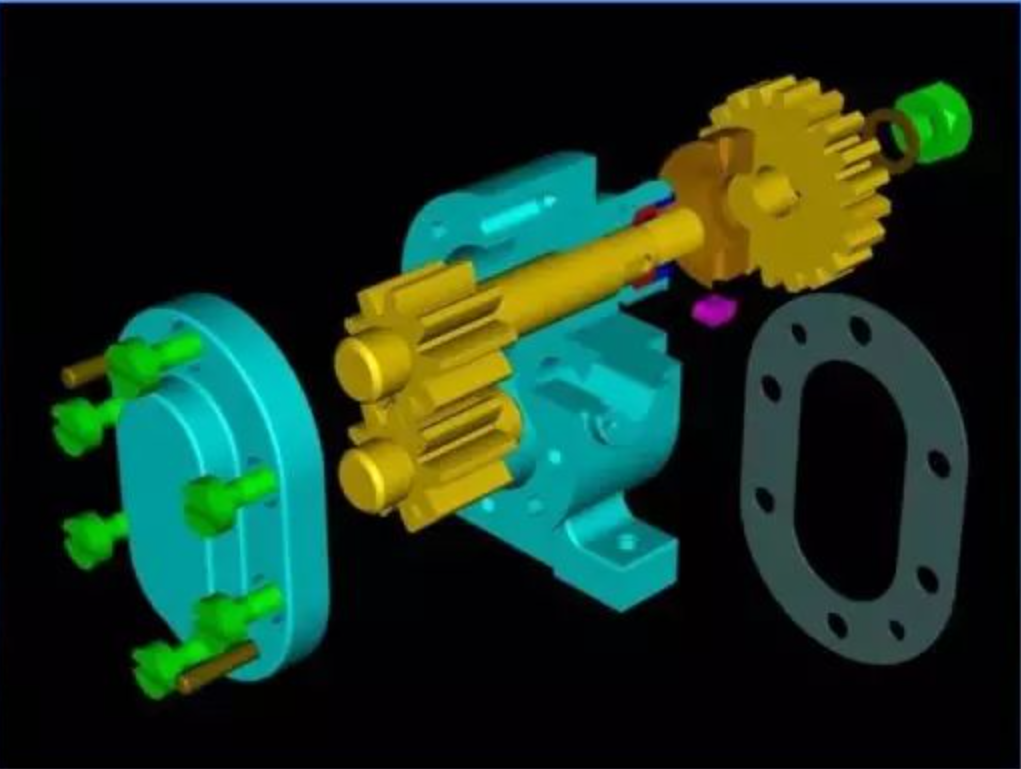
Common parts:
parts whose structure and size parameters are standardized by national standards, such as gears, springs, etc.
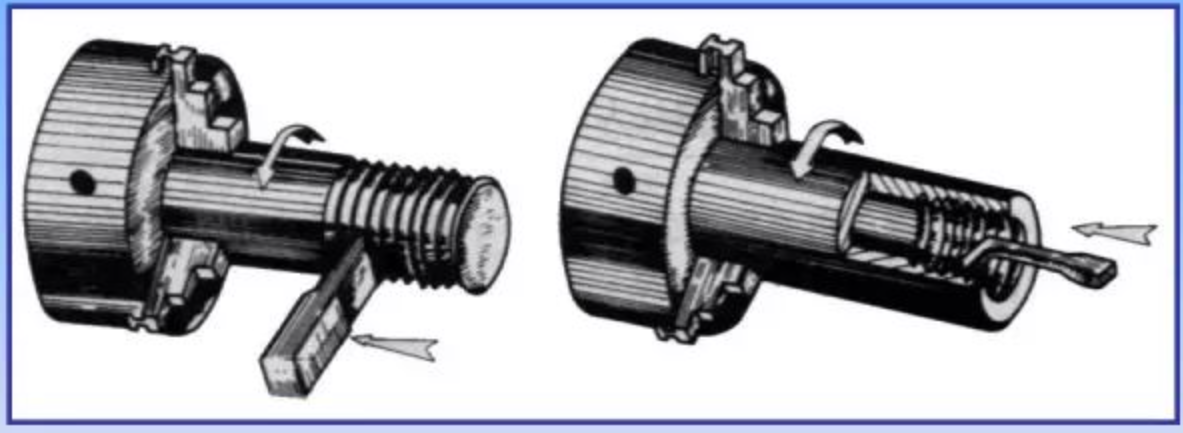
Thread formation:
Mechanism elements of the thread
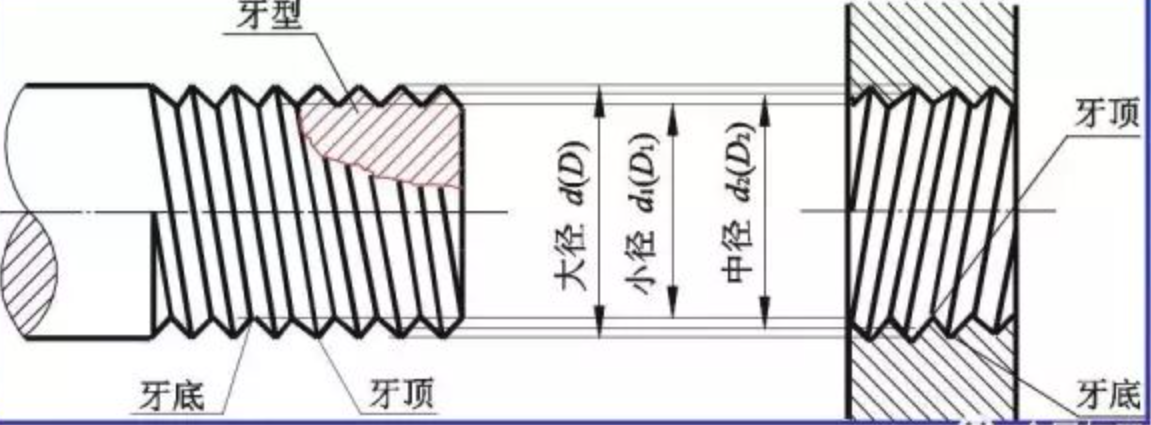
1、 The profile shape of the tooth is obtained by cutting the thread through the plane of the thread axis.
2、 Diameter large diameter, expressed by d(external thread) or D(internal thread); The path, denoted by d1 or D1; The middle diameter is denoted by d2 or D2
1、 The profile shape of the tooth is obtained by cutting the thread through the plane of the thread axis.
2、 Diameter large diameter, expressed by d(external thread) or D(internal thread); The path, denoted by d1 or D1; The middle diameter is denoted by d2 or D2
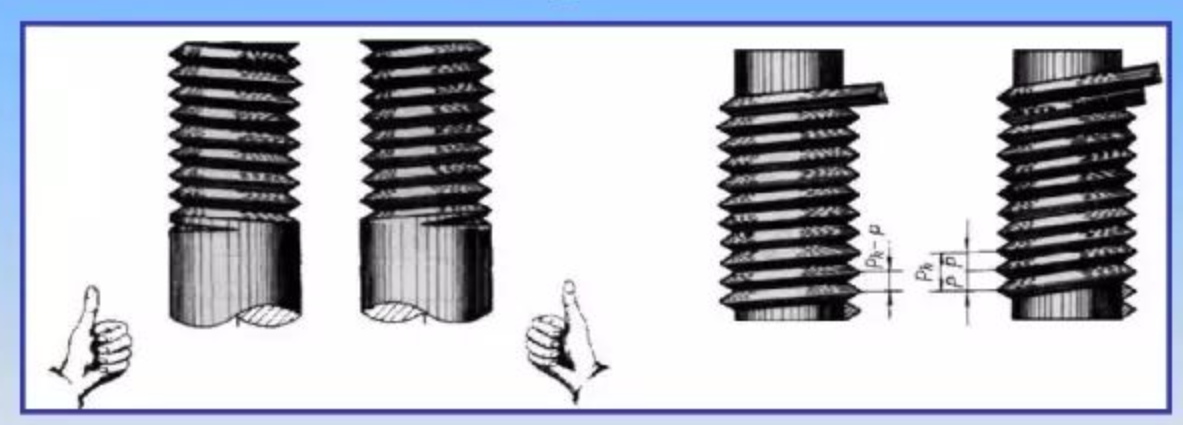
3, the rotation is divided into left ([LH) and right
4, the number of threads n thread has single thread and multi-thread points,
5, pitch P and lead P
4, the number of threads n thread has single thread and multi-thread points,
5, pitch P and lead P
Specified drawing of thread
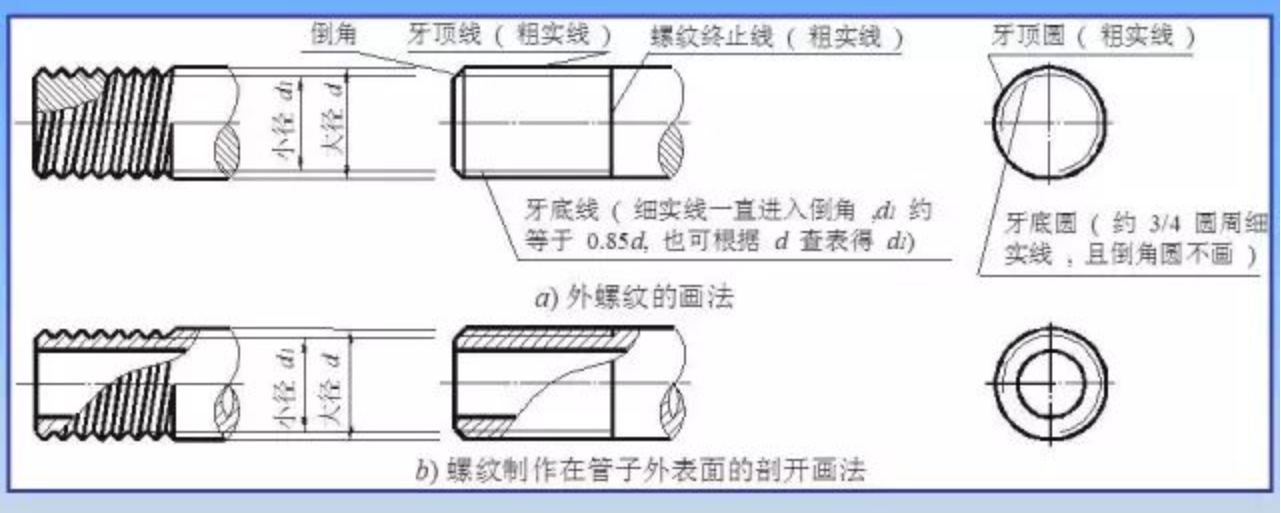
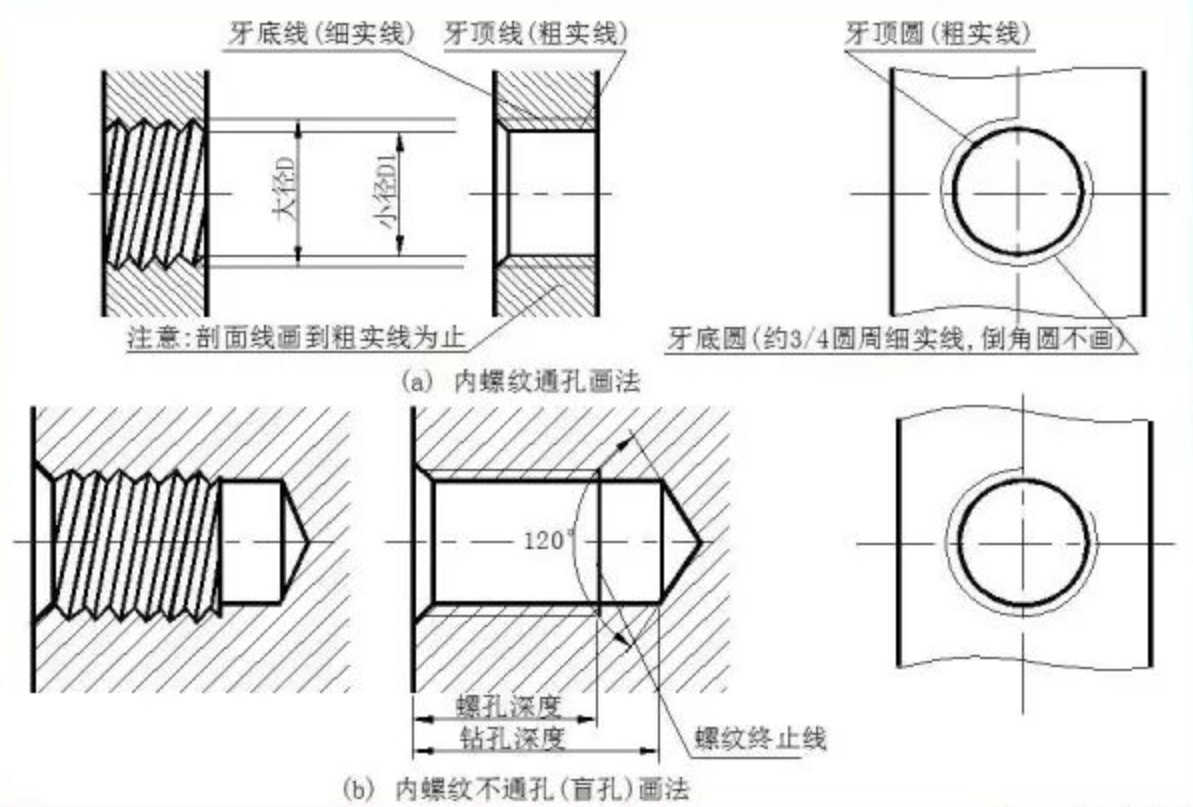
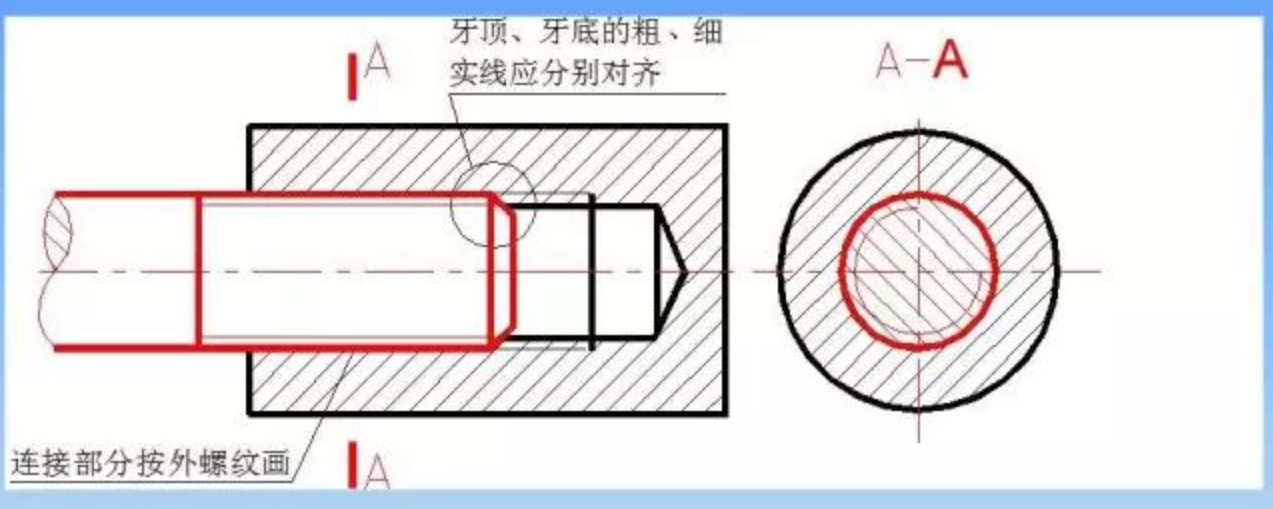
It indicates two lines of thread,
which can be distinguished by hand to draw thick solid lines,
and can not draw fine solid lines.
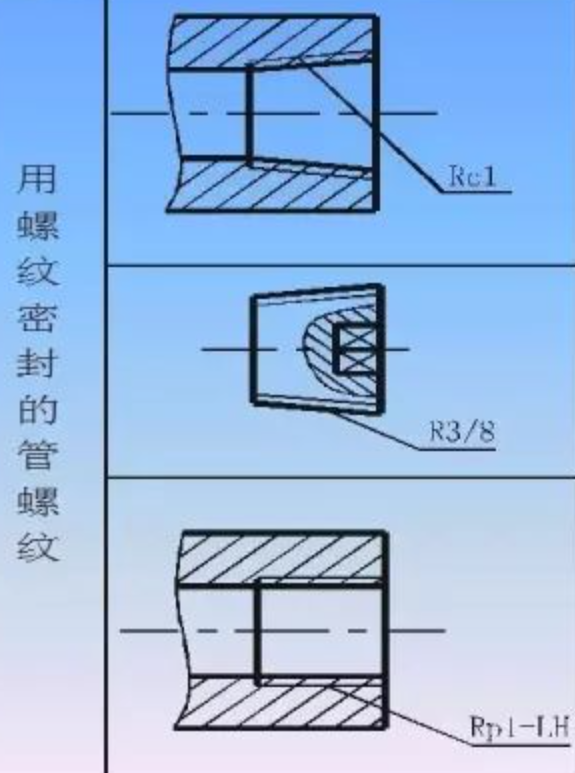
Type and mark of thread
Thread according to the use can be divided into connection thread (ordinary thread, pipe thread, etc.) and transmission thread (trapezoid, sawtooth, etc.);
According to the tooth type can be divided into triangle, trapezoid, sawtooth shape, etc.
According to whether the thread elements are standard, standard thread, special thread and non-standard thread (only the tooth type meets the standard is called special thread, and the tooth type does not meet the standard is called non-standard thread)
Thread according to the use can be divided into connection thread (ordinary thread, pipe thread, etc.) and transmission thread (trapezoid, sawtooth, etc.);
According to the tooth type can be divided into triangle, trapezoid, sawtooth shape, etc.
According to whether the thread elements are standard, standard thread, special thread and non-standard thread (only the tooth type meets the standard is called special thread, and the tooth type does not meet the standard is called non-standard thread)
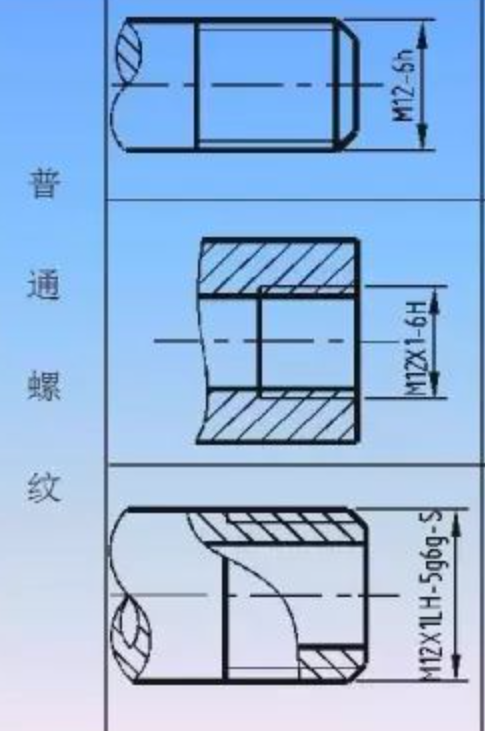
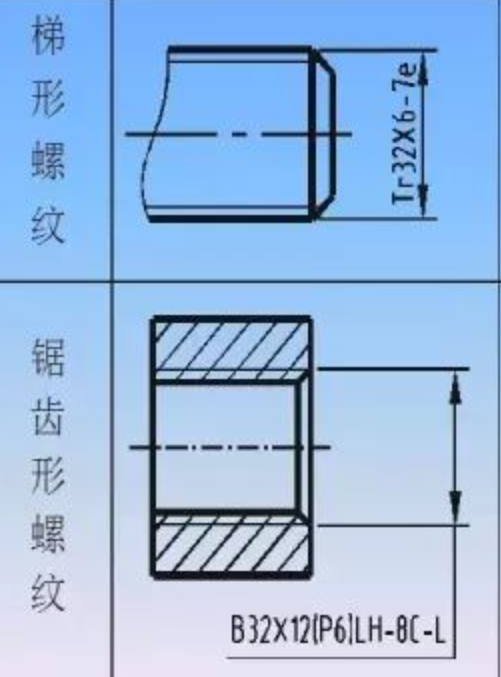
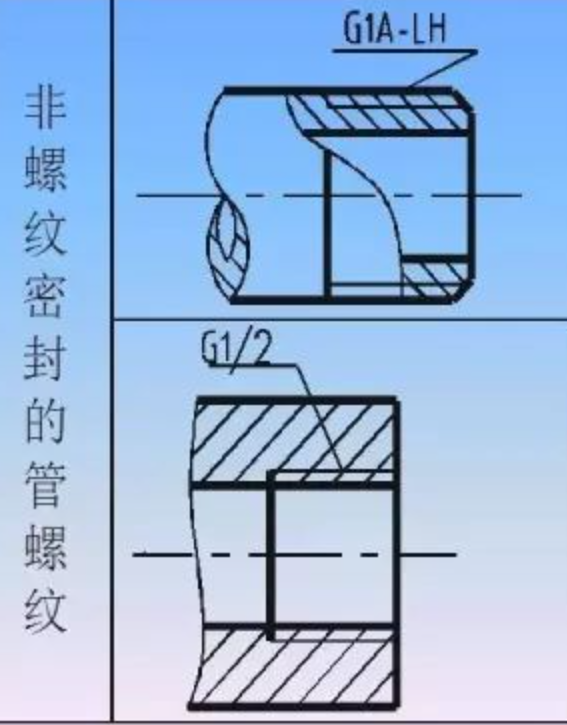
In order to better serve customers,
We will also provide professional installation advice and use after sale.
Email: sales08@sinofastener.com
whatsapp:00852-68229670
Why are screws tightened clockwise?