

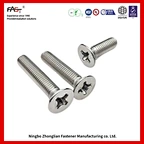
DIN 7991 Countersunk Socket Bolt ISO 10642 Marine
DIN 7991 Countersunk Socket Bolt | ISO 10642 Marine Flat Head Screw
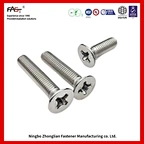
DIN 7991 countersunk socket bolt (ISO 10642) features a 100° conical head with hexagon socket (Allen) drive, designed to sit flush with or below the workpiece surface when installed into a matching countersunk hole. Available in carbon steel Class 8.8 / 10.9 / 12.9 and stainless steel A2-70 / A4-70 / A4-80 (316). Thread range M3–M36 per ISO 10642. Ideal for hull plating,deck hardware,hatch covers and structural joints where a smooth, flush surface is critical for hydrodynamic efficiency, safety and equipment clearance.
What Is a DIN 7991 Countersunk Socket Bolt?
TheDIN 7991 countersunk socket bolt — also called flat head socket screw,CSK boltorcountersunk cap screw — features a conical head with a 100° included cone angle as defined by ISO 10642. The hexagon socket (Allen key drive) enables high torque transmission with a clean, flush exterior profile.
Important — Metric vs. Imperial Countersink Angle:
- ISO 10642 / DIN 7991 (metric): 100° included cone angle
- ASME B18.3 (imperial): 82° included cone angle for flat head cap screws
These two standards are not geometrically interchangeable. Mixing metric ISO 10642 bolts with imperial 82° countersunk holes results in incomplete head seating and reduced clamping reliability. When replacing fasteners on equipment with mixed-standard origins, verify the countersink angle before substitution.
Note on DIN 7991 status: DIN 7991 was officially withdrawn in 2012 and replaced by ISO 10642. The DIN designation remains in widespread commercial use. The current valid standard for new procurement is ISO 10642.
Countersink Hole Requirement
For flush installation, the countersunk hole must match the bolt head geometry. ISO 10642 defines maximum countersink diameter and depth for each thread size. Insufficient countersink depth leaves the head protruding; excessive countersink diameter reduces the bearing surface and may compromise clamp load. Always machine the countersink to the dimensions specified in ISO 10642 Table 1 for the corresponding thread size.
DIN 7991 (ISO 10642) vs DIN 912 (ISO 4762) — Socket Head Comparison
| Feature | DIN 7991 / ISO 10642 (Countersunk) | DIN 912 / ISO 4762 (Hex Cap Screw) |
|---|---|---|
| Head Shape | Conical — sits flush with surface | Cylindrical — protrudes above surface |
| Cone Angle | 100° (metric) / 82° (ASME imperial) | N/A — flat bearing surface under head |
| Drive Type | Hexagon socket (Allen key) | Hexagon socket (Allen key) |
| Head Height | Higher (to accommodate cone) | Lower (compact profile) |
| Tool Access | Requires deeper pocket for Allen key | Standard clearance sufficient |
| Torque Capacity | Lower (socket depth limits engagement) | Higher (deeper socket engagement) |
| Primary Use | Flush surfaces — hull plating, deck plates, access panels | General structural — flanges, brackets, machinery mounting |
Material Grades and Marine Applications
| Grade | Rm (MPa) | Re (MPa) | Recommended Application |
|---|---|---|---|
| 8.8 + Zinc Plated | ≥800 | ≥640 | Hull interior structure, engine room bulkheads, dry compartments |
| 10.9 + HDG | ≥1000 | ≥900 | Deck substructure, hatch cover frames, high-load structural joints |
| 12.9 Black Oxide | ≥1200 | ≥1080 | Machinery foundations, critical load-bearing connections |
| A4-70 SS (316) | ≥700 | ≥450 | Deck hardware, splash zone fittings, BWTS piping |
| A4-80 SS (316 High-Strength) | ≥800 | ≥600 | High-load seawater-exposed joints, offshore deck fittings |
| PTFE/Xylan Coated (per base grade) | Per substrate | Per substrate | Chemical tank internals, extreme corrosion zones, BWTS flanges |
Note: Surface treatment selection depends on service environment. HDG provides sacrificial zinc protection suitable for atmospheric and splash zones. PTFE/Xylan coatings (25–35 μm DFT) provide chemical barrier protection for aggressive media. Material certificate per EN 10204 3.1 supplied with all orders.
Marine Applications
Note: The following application recommendations are based on typical industry practice for marine environments. Always verify material and coating selection against the specific service conditions of the installation.
| Application Area | Typical Usage | Recommended Material |
|---|---|---|
| Deck Plates and Walkways | Manhole covers, floor plates, non-slip walkway surfaces requiring flush finish | A4-70 / A4-80 SS |
| Hatch Covers | Pontoon-type and single-pull covers, weather-tight access panels | A4-80 SS / PTFE coated 10.9 |
| Hull Plating | Outer plate attachments, frame connections where flush surface reduces hydrodynamic drag | 10.9 HDG / A4-80 SS |
| Machinery Foundation | Engine bedplate, generator base mounting requiring flush cap | 10.9 / 12.9 |
| Pipe Support Brackets | Seawater pipe clamp brackets where flush mount prevents snag hazard | A4-80 SS / PTFE coated |
| Bulkhead Fittings | Watertight/oiltight bulkhead stiffeners, access panels | A4-70 SS / 8.8 zinc plated |
Countersunk vs Raised Countersunk vs Flat Head Cap Screw
| Type | Standard | Head Profile | Best For |
|---|---|---|---|
| Flat Countersunk (DIN 7991) | ISO 10642 | 100° cone — fully flush | Hull plating, deck plates, walkways |
| Raised Countersunk (DIN 7991 variant) | ISO 10642 variant | 100° cone with domed top | Decorative flush + tamper resistance |
| Hex Cap Screw (DIN 912) | ISO 4762 | Cylindrical — protrudes | General structural, high-torque joints |
Why Choose Countersunk Socket Bolts for Marine Use?
- Flush Surface: Eliminates protruding bolt heads on hull plating, deck plates and hatch covers — critical for hydrodynamic efficiency, crew safety and equipment clearance.
- Tamper-Resistant: Recessed hex socket drive prevents unauthorized removal on access panels, passenger vessel fittings and security-critical installations.
- Reduced Impact Damage: No protruding head to be struck by equipment, cargo or crew — reduces risk of bolt head damage and subsequent corrosion initiation.
- Clean Paintability: Seamless paint and coating coverage over the fastened area without raised edges that trap moisture or create coating failure points.
Why Choose sinofastener for DIN 7991 Countersunk Bolts?
- 36 Years of Manufacturing Excellence: Established in 1990. Annual capacity 50,000 tons. Full coverage of DIN / ISO / EN / ASTM / GB standards, M3 to M36.
- Full Traceability: EN 10204 3.1 mill certificate with every shipment. Complete heat number traceability from raw material to finished product.
- Flexible Surface Treatment: In-house support for zinc plating, HDG, PTFE/Xylan coating and passivation. Custom coating available for aggressive marine environments.
- Global Supply Capability: Supporting shipyards and marine contractors worldwide with 50,000-ton annual capacity and just-in-time delivery scheduling.
Standards Reference
- ISO 10642 — Fasteners — Hexagon socket countersunk head screws (current standard, replaced DIN 7991 in 2012)
- DIN 7991 — Hexagon socket countersunk head screws (withdrawn 2012, superseded by ISO 10642; still in commercial use)
- ASME B18.3 — Socket Head Cap Screws (imperial — 82° flat head variant; distinct from metric 100° geometry)
- GB/T 70.3 — Hexagon socket countersunk head screws (Chinese national standard, aligned with ISO 10642)
- EN 10204 — Metallic products — Types of inspection documents (Type 3.1 certificate requirement)
- ISO 3506 — Mechanical properties of fasteners made of corrosion-resistant stainless steel
- ISO 898-1 — Mechanical properties of fasteners made of carbon steel and alloy steel
FAQ
What is the difference between metric and imperial countersink angles?
ISO 10642 (metric DIN 7991) uses a 100° included cone angle, while ASME B18.3 (imperial) uses 82°. They are not interchangeable — a metric bolt in an imperial 82° countersink will contact only at the cone edges, reducing bearing area and potentially loosening under vibration. Always verify the countersink angle matches the bolt standard before installation.
Why was DIN 7991 withdrawn and replaced by ISO 10642?
DIN 7991 was withdrawn in 2012 as part of the harmonization of European fastener standards under ISO leadership. ISO 10642 defines the same product geometry with internationally agreed tolerances. The DIN 7991 designation remains in widespread commercial use — ordering"DIN 7991"and"ISO 10642"refers to the same screw profile.
Can I use a DIN 7991 countersunk bolt in an ASME 82° countersunk hole?
Not recommended. The 100° metric cone and 82° imperial cone will not seat fully. The bolt head will either sit proud (100° head in 82° hole) or contact only at the rim (reduced clamping area). For replacement on mixed-standard equipment, always match the countersink angle to the bolt standard.
How to prevent galling on stainless steel countersunk bolts?
For A4-70 and A4-80 stainless steel CSK bolts in marine service: use anti-seize compound on threads before installation, avoid excessive installation speed (reduces frictional heat), and ensure the countersink hole is clean and free of metal chips. For high-load applications, consider lubricated fasteners to reduce galling risk during torquing.
Contact Us
Email: sales@sinofastener.com | bobo@sinofastener.com
Tel: 0574-86592068
Website: www.zlfastener.com | www.sinofastener.com (Main)