
Test comparison of thread locking strength between ordinary and pre-coated glue
2024-10-29
Ningbo Zhonglian Fastener ManufacturingCo. Ltd
our company is a focus on fasteners thirty-four years of the source factory,
in the industry has a wealth of practical experience and methodology.
we will introduce to you the test comparison between ordinary gluing and pre-gluing on thread locking strength.
If you are interested, please pay attention to and collect ~
In order to better introduce to you,
If you are interested, please pay attention to and collect ~
In order to better introduce to you,
we will invite our professional quality inspection department personnel from time to time to do popular science experiments for you.
1. Why bolt treatment?
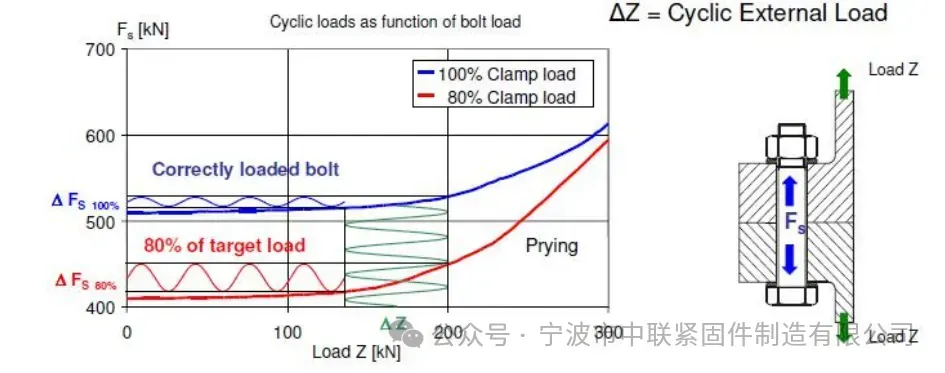
Preload (or shaft force, clamping force) is the only indicator of bolt connection design and use, 80% or even higher proportion of bolt fatigue fracture is from the lack of preload.
Preload (or shaft force, clamping force) is the only indicator of bolt connection design and use, 80% or even higher proportion of bolt fatigue fracture is from the lack of preload.
A lower preload interacting with an eccentric external load results in a higher cyclic stress amplitude inside the bolt (red wave line vs Blue fluctuation line),
thus accelerating the fatigue of the bolt, until the bolt fatigue fracture.
2. How to handle bolts?
If the bolt connection has no quality problems, design problems, and the preload is also within the design range, the bolt connection can be considered to have unlimited service life in engineering applications. In mature industries, such as wind power and hydropower, the quality and design of bolt connections usually do not have problems, and the bolt management generally only needs to solve one problem: to ensure that the bolt preload is in place.
There are three steps for bolt management of bolt preload:
1) Use fastening tools (such as torque wrench, hydraulic tensioner), with the help of ultrasonic bolt preload measuring equipment, tighten the bolt to be treated to the designed preload range
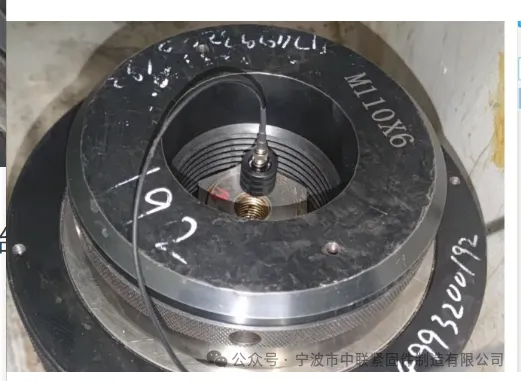
2) For bolts after treatment, use regular detection or long-term monitoring to track the change of bolt preload
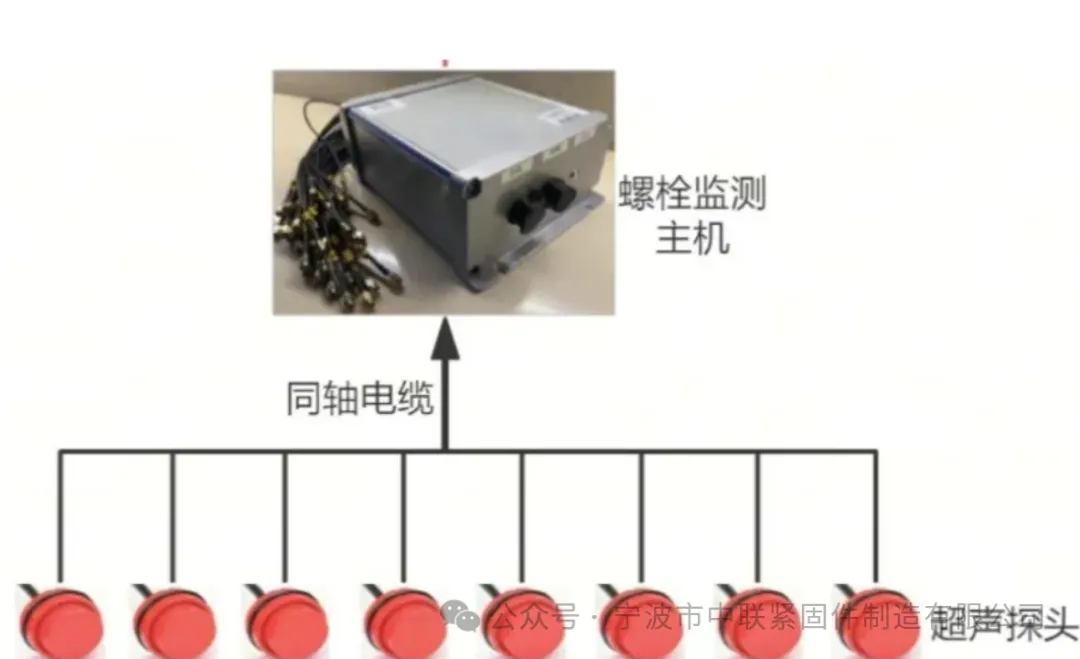
3) According to the change trend data of bolt preload after treatment, provide the owner with treatment evaluation report and customized bolt maintenance plan, so as to achieve the purpose of reducing the owner's bolt maintenance cost or even maintenance free.
As a removable fixed connection, thread connection is widely used because of its simple structure, reliable connection, convenient disassembly and other advantages, although the thread used in the connection has self-locking, but under the impact, vibration and variable load, the pre-tightening force may disappear at a certain moment, the connection may be loose.
There are many commonly used anti-loosening devices or methods, which can be roughly divided into the use of additional friction, mechanical methods and damage to the thread pair relationship and bonding anti-loosening.
Thread bonding and locking anti-loosening technology is a kind of bonding and anti-loosening technology by filling the thread locking adhesive into the gap of the thread pair and bonding (curing) the internal and external threads together to meet the requirements of anti-loosening.
With the continuous development of new materials and new technologies, thread locking adhesive anti-loosening technology is widely used in machinery industry.
Thread locking adhesive is a kind of adhesive anti-loosening agent, and its bonding performance directly affects the anti-loosening effect. Therefore, enterprises must verify the locking performance when selecting the varieties and types of thread locking adhesive. The locking effect of ordinary thread locking adhesive and pre-coated thread locking adhesive is verified and compared in this paper.
1.1 Curing mechanism of common thread locking adhesive
Common thread locking adhesive (hereinafter referred to as common glue) is a single component anaerobic adhesive, which is made of methacrylic acid double fat as the main component, adding an appropriate amount of initiator, accelerator, stabilizer and other additives.
Common thread locking adhesive (hereinafter referred to as common glue) is a single component anaerobic adhesive, which is made of methacrylic acid double fat as the main component, adding an appropriate amount of initiator, accelerator, stabilizer and other additives.
The single-component sealing adhesive made of the principle of oxygen to free radical polymerization can be long-term stable in the aerobic (air) environment, and can be quickly cured into a cross-linked solid polymer when the adhesive surface is isolated from oxygen, so as to play the effect of thread locking.
The main advantages of ordinary glue coating: strength controllable, can effectively prevent bolt loosening and rust, eliminate the fundamental defects of traditional mechanical locking method.
1.2 Curing mechanism of pre-coated thread locking adhesive
Precoated thread locking adhesive (hereinafter referred to as precoated) is a new type of two-component solidified water-based anaerobic adhesive developed on the basis of single component anaerobic adhesive.
The two components are evenly mixed and coated on the thread surface in advance. After drying, a layer of adhesive film with certain adhesion is formed. When assembled and screwed in, the adhesive film and microcapsule are crushed to release the initiator and adhesive liquid, which causes the anaerobic adhesive monomer to undergo free radical polymerization, forming a thermosetting plastic with certain strength and toughness, filling the gap of the mesh part of the thread, locking and sealing the thread.
The main advantages of pre-coating: save the on-site coating process, improve the assembly efficiency, pre-coating parts can be stored for a long time, available at any time, and simplify the production process.
1.3 Experimental comparison
(1) When the pre-tightening tension is 80N·m (large torque), the destruction torque of the two gluing methods is equivalent, and the average disassembly torque of the pre-gluing method is better than that of the ordinary gluing method.
(2) When the pre-tightening torque is 30N·m (medium torque) or 18N·m (small torque), the damage torque and average disassembly torque of the ordinary gluing method are better than that of the pre-gluing method.
(3) Although the efficiency of pre-gluing is higher than that of ordinary gluing, its curing performance of small torque bolts is worse than that of ordinary gluing. If the locking of bolts requires high reliability, it is not recommended to use pre-gluing instead of ordinary gluing.
Fastener Industry News: Trends and Developments
Fastener Fair Stuttgart 2025
Related Article

Shanghai's 15th Five-Year Plan targets LNG carriers, deep-sea equipment, and polar ships. What this means for marine fastener demand and supply chain opportunities in 2026-2030.
Shanghai 15th Five-Year Plan for Shipbuilding: Marine Fastener Demand Outlook 2026-2030
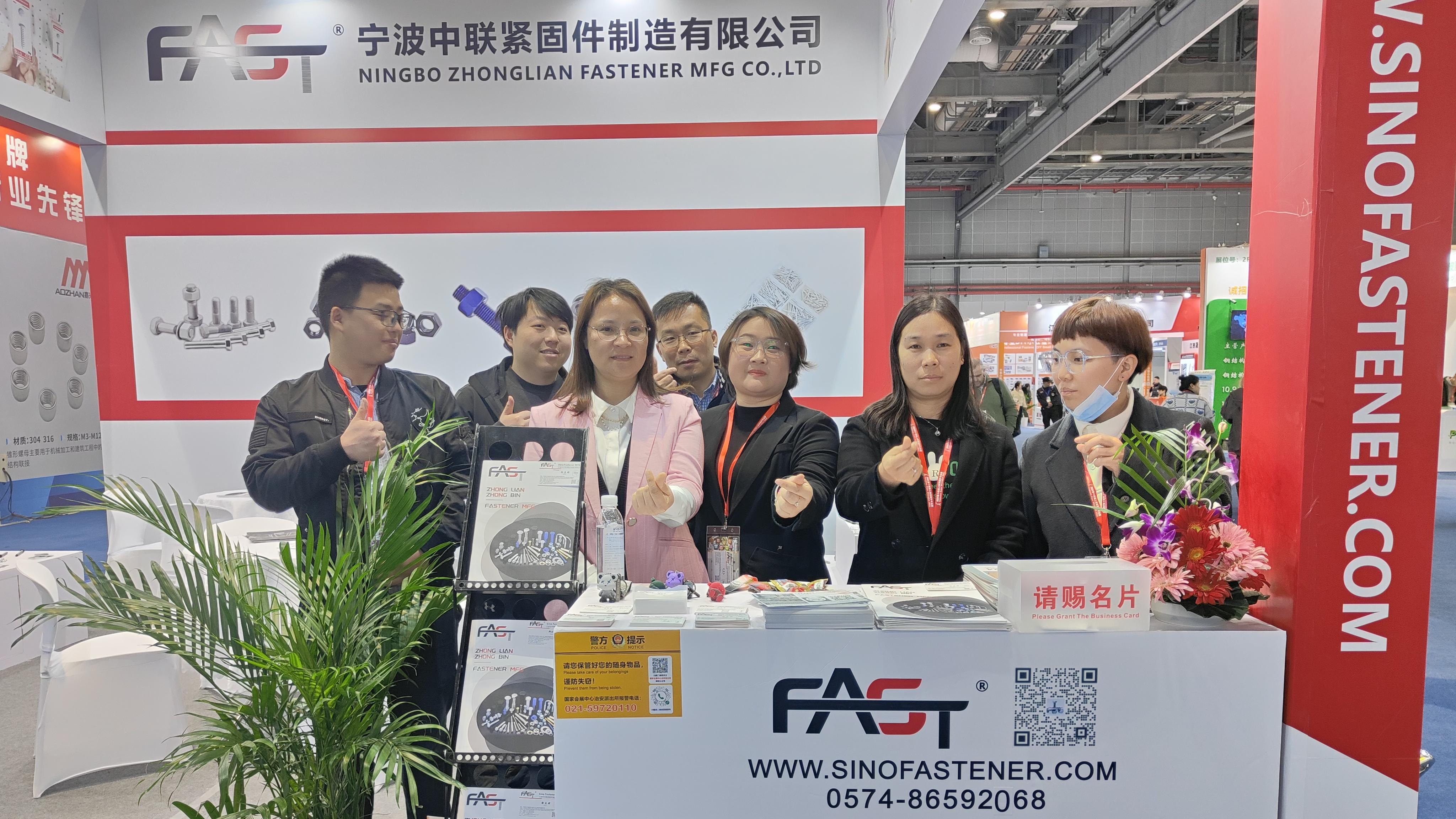
INTERNATIONAL FASTENER SHOW CHINA, FASTENER EXPO SHANGHAI, FASTENER TRADE SHOW
International Fastener Show China