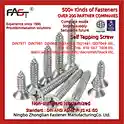
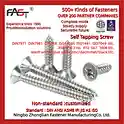
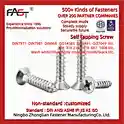
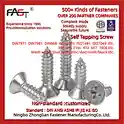
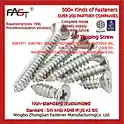
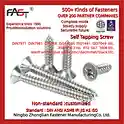
DIN 7981 / DIN 7982 / DIN 7983 Stainless Steel Self-Tapping Screw
DIN 7981 / DIN 7982 / DIN 7983 Stainless Steel Self-Tapping Screw
Standard: DIN 7981 / DIN 7982 / DIN 7983 | ISO 7049 / ISO 7050 / ISO 7051
Head Type: Pan Head (7981) / Countersunk Flat Head (7982) / Raised Oval Head (7983)
Size Range: ST 2.2 – ST 9.5
Length Range: 6.5 mm – 50 mm
Thread Type: Self-Tapping, Thread-Cutting Type AB
Drive Type: Phillips (PH) / Pozidriv (PZ)
Material: SS304 / SS316 / Carbon Steel (Zinc Plated)
Surface Treatment: Passivation (Stainless) / Zinc Plated (Carbon Steel)
Application: Marine Electrical Cabinet / HVAC Ducting / Control Panel / Interior Outfitting
Overview
The DIN 7981 (Pan Head), DIN 7982 (Countersunk Flat Head), and DIN 7983 (Raised Oval Head) are cross-recessed self-tapping sheet metal screws. They cut their own mating thread into sheet metal, extruded profiles, or thin-gauge plates during installation, eliminating the need for pre-tapped holes or nuts on the mating side.
These three standards share the same thread geometry and driving system. The only difference is the head profile:
- DIN 7981 (ISO 7049): Pan head — general-purpose, visible fastening where a low-profile round head is acceptable.
- DIN 7982 (ISO 7050): Countersunk flat head — flush-mount installation for smooth surfaces.
- DIN 7983 (ISO 7051): Raised oval head — intermediate between pan and countersunk, with a decorative appearance.
Material Selection for Marine Environments
| Material | Corrosion Resistance | Typical Use |
|---|---|---|
| SS316 (A4) | High — pitting and crevice corrosion resistant due to 2–3% Mo content | Above-deck panels, bridge consoles, exterior cabinets in salt-spray zones |
| SS304 (A2) | Moderate — suitable for interior or sheltered locations | Engine room control boxes, accommodation interior panels, galley equipment |
| Carbon Steel + Zinc Plated | Low — for dry interior applications only | Land-based control cabinets, HVAC ducting in non-corrosive environments |
Pre-Drilling Requirements
Self-tapping screws of Type AB require a pilot hole (not a tapped hole) drilled to the correct diameter. The pilot hole diameter must be smaller than the screw's major thread diameter to allow the cutting tip to form the thread in the base material.
Recommended pilot hole sizes vary by screw diameter. As a general guide:
| Screw Size | Major Diameter (mm) | Recommended Pilot Hole (mm) — Steel | Recommended Pilot Hole (mm) — Aluminium |
|---|---|---|---|
| ST 2.2 | 2.2 | 1.6 | 1.5 |
| ST 2.9 | 2.9 | 2.0 | 1.9 |
| ST 3.5 | 3.5 | 2.5 | 2.4 |
| ST 3.9 | 3.9 | 2.8 | 2.7 |
| ST 4.2 | 4.2 | 3.2 | 3.0 |
| ST 4.8 | 4.8 | 3.6 | 3.4 |
| ST 5.5 | 5.5 | 4.2 | 4.0 |
| ST 6.3 | 6.3 | 4.8 | 4.6 |
| ST 8.0 | 8.0 | 6.1 | 5.8 |
| ST 9.5 | 9.5 | 7.3 | 7.0 |
Note: Pilot hole sizes are approximate. Always verify with test holes in the actual base material before series assembly.
Marine Application Examples
- Electrical cabinet enclosure fastening on bridge and wheelhouse
- HVAC duct section connections in ventilation systems
- Interior lining panel installation in accommodation areas
- Control box mounting in engine room (SS316 variant)
- Galley and sanitary unit panel fixing
Ordering Information
When requesting a quote, please specify:
- Standard and head type (e.g. DIN 7981 Pan Head)
- Screw size and length (e.g. ST 4.2 × 16)
- Material (SS304 / SS316 / Carbon Steel Zinc Plated)
- Quantity
- Any special packaging or marking requirements
SINOFASTENER supplies DIN 7981 / 7982 / 7983 self-tapping screws in SS304, SS316, and carbon steel variants. Material certificates are provided per EN 10204 3.1 upon request. Annual production capacity: 50,000 tons.
E-mail:sales@sinofastener.com
SINOFASTENER
FAQ
Q1: What is the difference between DIN 7981, DIN 7982, and DIN 7983?
A: They share the same thread and drive system. The difference is the head shape: DIN 7981 has a pan head, DIN 7982 has a countersunk flat head, and DIN 7983 has a raised oval head. Choose based on whether you need flush-mount (7982), standard visible fastening (7981), or a decorative intermediate profile (7983).
Q2: Do these screws require a tapped hole?
A: No. These are self-tapping (thread-cutting) screws. They require a pre-drilled pilot hole only — no tapping needed. The screw cuts its own thread into the base material during installation.
Q3: Can SS316 self-tapping screws be used in saltwater spray zones?
A: Yes. SS316 contains 2–3% molybdenum, which provides resistance to pitting and crevice corrosion in chloride-containing environments. For above-deck installations exposed to salt spray, SS316 is the recommended material grade.
Q4: What is the difference between thread-cutting (Type AB) and thread-forming self-tapping screws?
A: Thread-cutting screws (Type AB, as specified in DIN 7981/7982/7983) have a sharp gimlet point that cuts a thread path into the material. Thread-forming screws displace material without cutting, creating the thread by plastic deformation. DIN 7981/7982/7983 are thread-cutting type.
Q5: Can these screws be used to fasten aluminium sheets?
A: Yes, but the pilot hole diameter should be slightly smaller than for steel to compensate for the softer base material. Refer to the pilot hole table above for guidance, and always confirm with test holes first.